


Vane and wire mesh mist eliminators both serve the same purpose, to remove droplets from gas streams, improve efficiency and to protect downstream equipment, however each of their designs, applications and performance characteristics differ. It’s important to know which product is best suited to your needs and processes to ensure you get the best results.
What is a Wire Mesh Mist Eliminator?
Wire mesh mist eliminators utilise layers of crimped knitted mesh to form a packed mesh mattress with a large surface area and a high air flow. The knitted mesh can be manufactured using any grade of stainless steel or exotic alloy, ETFE and PTFE plastic filaments, various glass fibres or a mixture of different materials.
The mesh works by capturing droplets from a gas stream and causing them to coalesce into larger droplets, eventually falling away. The higher surface area helps to capture finer mist and droplets from 2 to 5 microns in size, while the free volume allows air and gases to pass through with minimal pressure drop.
The versatility of wire mesh mist eliminators can make it ideal for bespoke solutions within the oil, gas and petrochemical processing industries. Factors such as size, shape, density and material can all be altered to suit different working environments and processes.
Advantages of Wire Mesh Mist Eliminators:
- High efficiency: higher surface area makes wire mesh for efficient at capturing very fine mist droplets.
- Versatile: suitable for a wide range of applications across a variety of industries.
- Customisable: made bespoke to specific conditions and ideal for applications that require a flexible design.
Limitations:
- Pressure drop: the density can lead to higher pressure drops under high flow rates or viscous fluids.
- Fouling: the small aperture of the mesh can capture particulate matter or sticky substances and can become clogged over time, requiring maintenance.
What is a Vane Mist Eliminator?
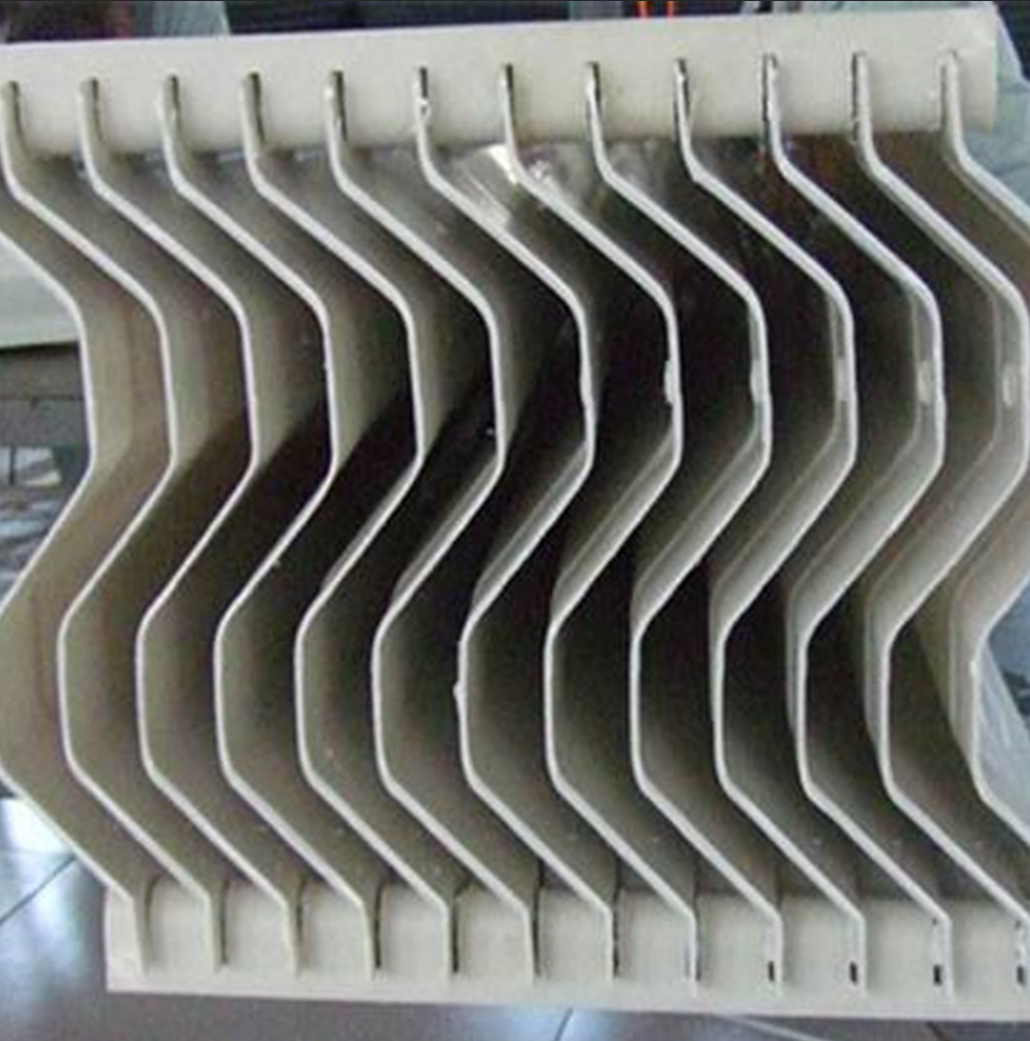 Vane mist eliminators are made up of a series of plates in a zigzag pattern, channelling the airflow and capturing droplets along the way. By forcing the airflow to change directions at multiple intervals, droplets within the stream collide with the surface of the vanes where they then coalesce and drain away.
Vane mist eliminators are effective at capturing larger droplets, usually greater than 10 microns. Vanes can be made from either a range of metal alloys or plastic materials depending on what is needed for the working environment.
Similarly to wire mesh, vanes can also be customised to better suit individual needs. Factors such as blade type, blade thickness, blade spacing, sizes and shapes can all be adjusted according to requirements.
Advantages of Vane Mist Eliminators:
- Lower pressure drop: the open design of the vanes allows air to flow more easily through the structure making it more suitable for high-flow applications.
- Less prone to fouling: wider air flow channels are less likely to become clogged.
Limitations:
- Less effective for fine mist: not as effective at capturing fine mist droplets within a gas stream, making it less suitable for applications where removing sub-micron mist is critical.
- Space constraints: vane pads are bulkier than wire mesh, meaning they will take up more space within a system.
Choosing between Vane and Wire Mesh Mist Eliminators
Before deciding, you should consider the desired outcome, the process and the working environment. If the removal of fine mist droplets is your primary goal, then wire mesh mist eliminators would be the best option. However, if you’re working with high flow rates and require a low pressure drop solution, then vane mist eliminators would be the better choice.
If you’re ever unsure on which product you need for your requirements, then you would be best to seek the advice of a chemical engineer. Alternatively, if you know which product you would need, then you can discuss your options with a member of our team.
